History, Symbolism, Remembrance, Healing, and the Sacred Art of Keeping Our Dead Close
Compiled by Elizabeth Robles, MSMHC, CT, LPC, FT
Licensed Professional Counselor and Fellow in Thanatology
Welcome
You are standing before an altar of remembrance, also called an ofrenda, a sacred space created to honor people who have died, acknowledge the lives they lived, and affirm that love does not disappear when physical life ends.
An altar is not simply a collection of photographs, flowers, candles, food, and beautiful objects. It is a meeting place between memory and presence, sorrow and gratitude, the living and the dead. It gives form to something grief often struggles to express:
You were here.
You mattered.
You remain part of us.
This altar was created for the National Latino Behavioral Health Association community as a place of homage, reflection, cultural affirmation, and collective healing. Although it draws deeply from Mexican altar traditions, it also recognizes that Latin America is not culturally uniform. Practices honoring the dead vary across countries, Indigenous nations, regions, families, religions, and generations. Some are solemn, some exuberant, some Catholic, some Indigenous, some secular, and many are beautifully blended.
There is no single altar that represents every Latin American community. There is no universally correct number of levels or mandatory arrangement of objects. The altar is both inherited and personal: a cultural form shaped by local tradition, family memory, spiritual belief, available resources, creativity, and love.
In Honor and Memory of Josie Torralba Romero
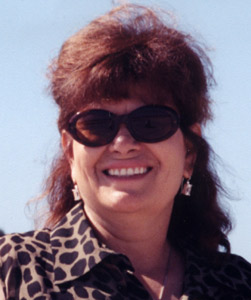
At the highest place on this altar is the photograph of Ms. Josie Torralba Romero, the first president of the National Latino Behavioral Health Association and a major leader in its formation.
NLBHA remembers Josie as a social worker, educator, advocate, and pioneer whose professional life was dedicated to improving mental-health, social-service, and child-welfare systems for Latino and other underserved communities. Her leadership was instrumental to NLBHA’s progress following its establishment in 2000. She died in 2004.
Her placement at the head of the altar does not suggest a hierarchy of grief. Instead, it recognizes her foundational and ancestral place within the history of the NLBHA community. Josie Torralba Romero is at the head of the altar with gratitude for the vision and service that helped make NLBHA and this gathering possible.
Josie Torralba Romero, presente!
In Remembrance of September 11, 2001
The 2026 NLBHA Conference concludes on September 11, twenty-five years after the terrorist attacks of September 11, 2001.
On that morning, four commercial aircraft were hijacked. Two were flown into the Twin Towers of the World Trade Center in New York City. A third struck the Pentagon in Arlington, Virginia. The fourth crashed near Shanksville, Pennsylvania, after passengers and crew members attempted to regain control of the aircraft.
A total of 2,977 people from 90 nations were killed: 2,753 in New York, 184 at the Pentagon, and 40 aboard Flight 93. The dead included 441 first responders, representing the greatest loss of emergency responders during a single event in United States history. (911 Memorial)